


Learning Armenian as a Heritage Speaker: Balancing Family Language and Formal Armenian
Growing up with Armenian at home can give heritage speakers a strong connection to the language long before they ever study it formally. Many can follow family conversations, understand familiar expressions, and speak comfortably in everyday situations, yet still find reading, writing, formal vocabulary, or grammar much more difficult.
This article explores why that imbalance is so common and how heritage speakers can build on the Armenian they already know. It looks at the difference between family and classroom Armenian, the role of Eastern and Western Armenian, common gaps in literacy and formal registers, and the emotional pressure that can come with learning a heritage language.
The focus throughout is practical: how to expand Armenian into new areas of life while preserving the forms, expressions, and family connections that made the language meaningful in the first place.
Table of Contents
- What Makes an Armenian Heritage Speaker Different from a Beginner?
- Why Family Armenian and Classroom Armenian Can Feel Like Different Languages
- Eastern Armenian, Western Armenian and the Armenian You Grew Up With
- Why Reading and Writing Often Become the Biggest Challenge
- Learning the Armenian Alphabet as Someone Who Already Speaks Armenian
- Armenian Spelling Can Be More Complicated Than Expected
- Expanding Armenian Beyond the Family
- The Emotional Side of Learning Armenian as Your Heritage Language
- A Practical Heritage Armenian Speaker Learning Plan
- How Formal Armenian Lessons Can Help Heritage Speakers
- FAQs About Learning Armenian as a Heritage Speaker
→Sign Up Now: Free Trial Armenian Lesson With a Native Teacher!←
What Makes an Armenian Heritage Speaker Different from a Beginner?
Heritage speakers usually come to formal Armenian study with a set of abilities that developed naturally through family life. They may understand conversations with little effort, pronounce words confidently, recognize common sentence patterns, and use everyday expressions without consciously thinking about the grammar behind them. Cultural knowledge is often embedded in that language too, from humor and family routines to forms of address and familiar ways of telling stories.
At the same time, those abilities can be distributed unevenly across different skills. A speaker who communicates easily with relatives may read slowly, avoid writing, lack confidence with spelling, or struggle to discuss subjects outside familiar daily life. Formal vocabulary, grammatical terminology, academic registers, and more complex written structures may all be much less developed than listening and speaking.
Shushan Karapetian describes this pattern in her 2014 study, “How Do I Teach My Kids My Broken Armenian?”: A Study of Eastern Armenian Heritage Language Speakers in Los Angeles. Her research places Armenian heritage learners within a broader heritage-language profile in which oral and aural skills often develop more strongly than literacy because the heritage language is acquired mainly through interaction at home, while most formal education takes place in the dominant language.
For Armenian heritage speakers, common strengths may therefore include:
- strong listening comprehension
- intuitive pronunciation
- familiarity with everyday vocabulary
- automatic knowledge of common sentence patterns
- cultural knowledge carried through the language
- familiarity with humor, idioms, and family expressions
Areas that often need more structured development include:
- reading fluency
- spelling
- writing
- explicit grammatical knowledge
- broader vocabulary
- formal or academic registers
- confidence using Armenian beyond familiar family settings
Karapetian’s study also highlights how literacy can become especially important later in life. Several participants wanted to improve their Armenian reading so they could access books that had long been present in their homes and valued by older relatives. Their spoken connection to Armenian was already strong, but literacy would allow them to participate in parts of the language that had previously remained out of reach.
This uneven profile is central to understanding heritage-language learning. A heritage speaker may already have deep knowledge in some areas while needing systematic instruction in others, which makes their learning needs very different from those of someone encountering Armenian for the first time.
Why Family Armenian and Classroom Armenian Can Feel Like Different Languages
Family Armenian develops around the situations in which it is actually used. Heritage speakers may grow up discussing meals, relatives, school, plans, memories, celebrations, and everyday problems in Armenian. They hear jokes, arguments, affectionate expressions, stories, and repeated conversational patterns, all of which build a strong command of the language needed for close personal interaction.
Formal study introduces a different range of demands. Learners may be asked to read essays, discuss history, analyze literature, follow the news, give presentations, write formal messages, or explain abstract ideas. These contexts require vocabulary, structures, and registers that may rarely appear in ordinary family conversation.
Heritage speakers who use Armenian mainly at home often have extensive exposure to colloquial speech but much less experience with the formal standard used in education, literature, media, and other public contexts. Formal instruction can expand that repertoire through literacy, richer vocabulary, explicit grammatical knowledge, and practice with styles of Armenian that require more than everyday conversation.
The distinction also appears clearly in a UCLA National Heritage Language Resource Center interview with Armenian heritage speaker Anahit. She explains that regular conversations with family did not necessarily preserve vocabulary she had previously used in university classes, because home interactions rarely required discussion of complex historical or academic topics. The example shows how language develops according to use: frequent Armenian conversation can sustain one kind of fluency while leaving other registers comparatively underused.
For heritage speakers, classroom Armenian can therefore feel unfamiliar because it asks the language to do things it may never have needed to do at home. Formal study broadens the range of subjects, situations, and audiences a speaker can handle, making it possible to use Armenian more confidently in reading, writing, education, professional settings, and public communication.
Home Armenian Is a Legitimate Part of the Language
The Armenian spoken at home carries its own vocabulary, patterns, pronunciation, and social meanings. Depending on the family, it may reflect colloquial Eastern Armenian, Western Armenian, Iranian Armenian, a regional dialect, or a variety shaped by long-term contact with another language. These forms are part of the real linguistic diversity of Armenian and often preserve features closely connected to a family’s history and community background.
Karapetian’s 2014 study distinguishes between colloquial spoken Eastern Armenian and the more formal standard associated with schooling, literature, and media. Her analysis shows that heritage speakers may be highly comfortable with the forms used in everyday family interaction while having much less control over the registers expected in formal contexts.
Learning formal Armenian is therefore most useful when it adds flexibility. A heritage speaker can develop the ability to recognize when a more formal register is appropriate, how vocabulary changes across contexts, and how written Armenian differs from the language used around the dinner table. That broader awareness allows learners to move more confidently between family conversation, academic discussion, professional communication, and written texts.
The distinction matters because family Armenian is often closely tied to identity, memory, and belonging. A course that builds on that foundation can help learners expand their linguistic range while also understanding how their own variety fits within the wider Armenian language.
Eastern Armenian, Western Armenian and the Armenian You Grew Up With
Armenian heritage speakers do not all inherit the same Armenian. The language developed numerous regional dialects before Eastern and Western Armenian emerged as the two principal modern literary standards in the nineteenth century. Eastern Armenian later became the official variety used in Armenia, while Western Armenian became especially important across many diaspora communities.
Family language, however, does not always fit neatly into one of those two categories. A heritage speaker may have grown up with Eastern Armenian from Armenia, an Iranian variety of Eastern Armenian, Western Armenian, a regional dialect, or a family variety shaped by several influences at once.
Depending on the community, Armenian may also show long-term contact with languages such as English, Russian, Arabic, Turkish, or Persian. Some families expose children to both Eastern and Western Armenian, particularly in large diaspora communities where speakers of different backgrounds interact regularly.
That variety can make formal study unexpectedly complicated. A learner may enter a course assuming that the Armenian they hear in class will match the Armenian they already know, only to find that certain words, sounds, grammatical forms, or spelling conventions feel unfamiliar.
Understanding your own linguistic background can therefore be an important first step. Knowing which Armenian your family speaks, and how it relates to the variety used in your course, makes it easier to see unfamiliar forms as part of a broader system rather than as evidence that your home Armenian is somehow deficient.
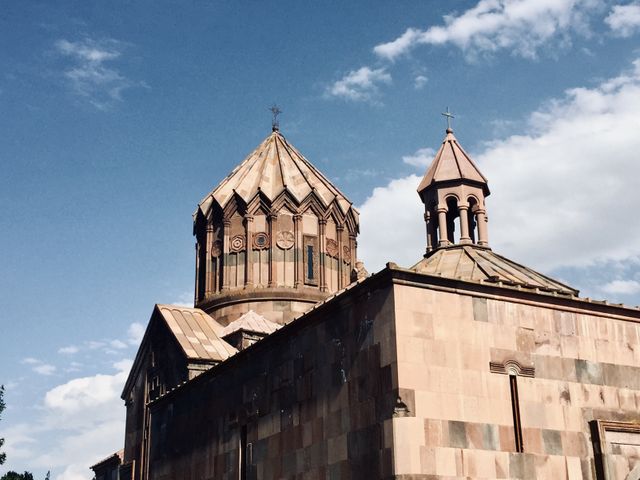
When the Armenian Taught in Class Is Not Your Armenian
Differences between home Armenian and classroom Armenian can appear in several areas:
- pronunciation
- vocabulary
- morphology
- grammar
- spelling
- common conversational expressions
For some heritage speakers, those differences are relatively minor. For others, especially those who grew up with one major variety and are taught another, the contrast can be substantial enough to affect confidence.
A student who speaks Eastern Armenian at home, for example, may encounter Western Armenian in a community school. Another learner may know a regional or family dialect but study a more standardized form in class. In both cases, familiar ideas can suddenly appear in unfamiliar linguistic forms.
The most useful approach is to identify the Armenian you already speak and then learn how the classroom variety differs from it. Comparing pronunciation, vocabulary, endings, and spelling systems can turn confusion into pattern recognition. Over time, learners can become comfortable moving between varieties without feeling that one must replace the other.
Why Reading and Writing Often Become the Biggest Challenge
Speaking and literacy do not necessarily develop together. Heritage Armenian is often transmitted primarily through conversation, so children may spend years hearing and speaking the language without receiving sustained instruction in reading, spelling, or writing.
At the same time, the dominant language of school usually becomes the language in which they learn to read books, write essays, take exams, and develop academic vocabulary. Armenian may remain strongest in oral communication even when it has been part of daily life since childhood.
That can create a striking contrast. Someone may understand Armenian immediately when it is spoken but need much more time to process the same language on the page. Writing can feel even more demanding because it requires active control over spelling, grammar, and vocabulary that may never have been consciously studied.
Developing literacy expands the range of things a heritage speaker can do with Armenian. Reading gives access to literature, journalism, history, and online content, while writing makes it possible to use Armenian in messages, formal communication, study, and professional contexts.
Learning the Armenian Alphabet as Someone Who Already Speaks Armenian
Learning the Armenian alphabet as a heritage speaker is very different from learning it as a complete beginner. A new learner may be discovering the sound, meaning, and spelling of a word all at once. A heritage speaker may already know hundreds or thousands of words by ear and simply need to connect familiar sounds with their written forms.
That existing knowledge can make literacy development much faster. Seeing a familiar word written down gives visual form to something the learner may have heard since childhood, while recurring endings and spelling patterns begin to make previously intuitive grammar easier to recognize.
Formal study can help learners connect pronunciation with spelling, notice how familiar words change grammatically, and understand patterns they may already use correctly in speech without knowing how to explain them. Reading then becomes a way of organizing and extending knowledge that is already partly there.
Armenian Spelling Can Be More Complicated Than Expected
Armenian spelling introduces another layer of complexity because learners may encounter more than one orthographic tradition. Modern Armenian uses both Classical and Reformed spelling conventions, and the system a learner sees often depends on the community and variety they are studying.
Western Armenian communities and many Iranian Armenian speakers traditionally use Classical Orthography, while the Republic of Armenia uses Reformed Orthography. The two systems share most of the language, but some words and letter combinations are written differently.
For heritage speakers beginning to write, consistency is usually more important than trying to master both systems immediately. Learning the orthography used by your teacher, course, or main Armenian variety provides a clear foundation. Once reading and spelling become more secure, becoming familiar with the other system can make texts from different Armenian communities much easier to understand.
A Few Spelling Differences Heritage Learners Will Notice
You do not need to memorise every difference between Classical and Reformed Armenian at once, but recognising a few common patterns can make reading across both systems much less intimidating.
Some frequent changes include:
- ոյ → ույ, as in քոյր → քույր (“sister”)
- եա → յա, as in Սարգսեան → Սարգսյան (Sargsyan/Sarkisian, a common surname)
- իւ → յու, as in ազատութիւն → ազատություն (“freedom”)
- ւ → վ in many positions, so spellings with վ are more common in Reformed Armenian
- the silent final յ found in some Classical spellings is generally omitted in the Reformed system
- է and օ are used more selectively in Reformed Armenian, with ե and ո replacing them in many positions inside words
The important thing for heritage learners is to look for patterns rather than treat each unfamiliar spelling as a completely new word. Once you recognise that -ութիւն in Classical Armenian often corresponds to -ություն in Reformed Armenian, for example, a whole family of words becomes easier to identify.
A practical exercise is to keep a small two-column list of words you encounter in both systems. After 20 or 30 examples, the most common spelling correspondences usually start to become predictable.
Expanding Armenian Beyond the Family
Heritage speakers often know enough Armenian for the situations they grew up using it in, but not necessarily for the situations they now want to use it in. The most effective way to expand your Armenian is to identify those missing areas deliberately instead of relying on general exposure.
Elen, an Armenian teacher who has been working with Language Trainers for five years, has seen this distinction firsthand in her teaching:
problem at work, discuss current affairs, give your opinion about a book, or talk about something you studied at university. Make a list of these situations and identify the vocabulary and expressions you're missing. This will give you a much clearer starting point for improving your Armenian than simply trying to learn more words in general.
Build Armenian Vocabulary by Topic, Not Just by Word Lists
Random vocabulary lists are easy to forget because the words are not connected to anything you actually want to say. A better approach is to build vocabulary around topics you already discuss comfortably in English.
Choose one topic at a time, such as:
- work
- university
- politics
- technology
- health
- literature
- emotions
- current affairs
- professional interests
Then build a small working vocabulary for that topic. Aim for roughly:
- 10 key nouns
- 5 useful verbs
- 5 adjectives
- 5 connecting phrases
- 5 questions you might genuinely ask or answer
For example, if the topic is work, do not stop at isolated words such as “meeting,” “deadline,” or “client.” Learn the language needed to use them in context: how to say that a meeting was postponed, explain what a client needs, describe a problem with a deadline, or give your opinion about a project.
Next, force yourself to use the vocabulary actively. Try three short tasks:
- Speak for one minute about the topic without switching to English.
- Write five sentences about it.
- Have a short conversation with a teacher or relative using the new vocabulary.
Keep a note of the English words you reach for when Armenian fails you. Those missing words are more valuable than a generic vocabulary list because they show exactly where your personal gaps are.
The goal is to reduce the gap between what you can think about and what you can discuss in Armenian.
Read Armenian Material That Gradually Moves Beyond Conversation
Reading becomes much easier when the difficulty increases in controlled steps. Jumping straight from family conversation to literary Armenian can be discouraging, especially if your reading speed is still developing.
A useful progression is:
short social posts → dialogues → short articles → news → essays → literature
At each stage, focus on understanding the main idea before looking up every unfamiliar word.
For short texts, try this routine:
- Read once without a dictionary.
- Underline only the words that block your understanding.
- Look up those words.
- Read the text again.
- Summarize it aloud in Armenian using your own words.
Once you can read a short article comfortably, move to material that introduces more formal vocabulary and longer sentence structures.
The University of Chicago Armenian programme follows a similar progression, moving learners from everyday communication and shorter texts toward newspaper articles, literary works, essays, and analytical discussion at more advanced levels.
You can also reuse the same text in several ways. After reading an article, write a three-sentence summary, explain it aloud to someone else, and then give your opinion on it. One piece of material can therefore train reading, vocabulary, speaking, and writing at the same time.
Practise Formal and Informal Versions of the Same Idea
Heritage speakers often have one register that feels natural, usually the language of family and everyday conversation. To become more flexible, practise expressing the same idea in different social situations.
Take a simple topic, such as changing jobs, moving house, or disagreeing with a decision, and explain it four ways:
- To a sibling
Use the relaxed Armenian you would naturally use at home. - To an older relative
Adjust vocabulary, tone, and forms of address where appropriate. - In a classroom or presentation
Use fuller sentences, more precise vocabulary, and clearer structure. - In written Armenian
Make the language more explicit and organized, since the reader cannot rely on tone or immediate context.
Then compare the four versions. Ask:
- Which words changed?
- Which expressions felt too casual for formal use?
- Where did I need more precise vocabulary?
- Did I rely on English more in one version than another?
- Which version felt least natural?
This kind of contrast practice is especially useful because it trains register directly rather than leaving it to develop by accident.
A good weekly exercise is to choose one topic and produce all four versions. Over time, you build a personal bank of ways to say the same thing across family, social, academic, and written contexts.
The aim is not to make your everyday Armenian more formal. It is to give you enough range to choose the Armenian that fits the situation.
The Emotional Side of Learning Armenian as Your Heritage Language
Heritage speakers often carry expectations that complete beginners never have to deal with. A beginner can mispronounce a word, forget an ending, or switch to English without anyone reading much into it. A heritage speaker may hear a very different reaction: “You’re Armenian, so shouldn’t you already know Armenian?”
That expectation can make ordinary language gaps feel personal. Difficulty with spelling may become guilt about not having learned enough from your family. Hesitation in conversation may feel embarrassing in front of relatives. An accent may become something to hide rather than simply one feature of a bilingual speaker’s Armenian. Some learners become perfectionistic, while others avoid speaking altogether unless they are sure they can say something correctly.
The problem is that avoidance can reinforce the very gaps that cause the insecurity. Shushan Karapetian’s 2014 research on Eastern Armenian heritage speakers in Los Angeles describes a cycle in which teasing, criticism, and fear of judgment lead learners to speak Armenian less often with more proficient speakers. That reduces access to the richer input and interaction they need in order to improve. Even comments intended affectionately can contribute to this. Participants recalled relatives laughing at “cute” or “funny” Armenian, correcting them publicly, or drawing attention to mistakes in ways that made them more self-conscious about speaking later.
Family correction is especially complicated because it often comes from people who genuinely want the language to continue. A parent or grandparent may hear an error and correct it immediately because they see themselves as helping preserve good Armenian. For the learner, however, constant interruption can shift attention away from meaning and toward performance. Conversation becomes a test.
A more useful approach is to separate communication from correction. If the goal is to keep a conversation going, minor errors can often wait. If the goal is focused practice, correction can be more deliberate and limited. Learners can also ask relatives or teachers to correct only recurring mistakes rather than every imperfect form. That makes it easier to notice useful patterns without turning every interaction into a grammar lesson.

Stop Measuring Yourself Against an Imaginary Armenian Native Speaker
Heritage speakers often compare themselves with a version of the Armenian speaker they think they should have become: someone who grew up in an Armenian family, speaks effortlessly, reads fluently, writes accurately, knows formal vocabulary, and moves comfortably between every variety and social situation.
That comparison is rarely realistic.
Heritage-language development is usually uneven because exposure itself is uneven. Someone may have spent thousands of hours listening to Armenian at home but almost no time writing it. Another person may understand older relatives perfectly but have little vocabulary for university, work, or politics. A speaker may sound natural in family conversation while feeling much less secure in formal settings. These differences reflect where and how the language was used, not a single overall level of competence.
The UCLA heritage-language interview makes this point clearly: some learners assume that Armenian ancestry should automatically correspond to native-like proficiency, then interpret any gap between that expectation and their actual abilities as evidence that something is wrong with their Armenian. A more accurate way to assess progress is to look at individual skills and domains.
Instead of asking “Do I speak Armenian like a native speaker?”, ask:
- Can I understand my relatives comfortably?
- Can I explain my work or studies without switching to English?
- Can I read a short article at a reasonable pace?
- Can I write a message without relying heavily on transliteration?
- Can I adjust how I speak when talking to family, an older person, or a teacher?
- Which situations still expose vocabulary or grammar gaps?
Those questions produce information you can actually use. They also make improvement measurable. A learner can be strong in listening, intermediate in speaking, and still developing literacy without needing to compress all of that into one judgment about whether their Armenian is “good enough.”
For heritage speakers, progress is often less about moving from beginner to advanced in a straight line and more about filling in missing parts of a language that has already developed deeply in certain areas.
A Practical Heritage Armenian Speaker Learning Plan
Heritage speakers make faster progress when they stop treating Armenian as one single skill. A useful plan starts by identifying what you already control, where the gaps are, and which situations you want Armenian to work in next.
1. Identify Your Armenian
Start by working out what kind of Armenian you actually grew up with. That might be Eastern Armenian from Armenia, Iranian Eastern Armenian, Western Armenian, a regional dialect, or a family variety influenced by more than one tradition.
Write down:
- where your parents and grandparents are from
- which variety they say they speak
- whether different relatives use different forms
- whether your spelling follows Classical or Reformed Orthography
- which variety your course or teacher uses
This gives you a clear reference point when unfamiliar pronunciation, vocabulary, or grammar appears in class.
2. Separate Your Skills
Avoid judging your Armenian with one overall label such as “good” or “bad.” Rate each skill separately from 1 to 5:
- listening
- speaking
- reading
- writing
Then add two more categories:
- formal vocabulary
- confidence outside the family
You may discover, for example, that your listening is 5/5 while your writing is 2/5. That immediately tells you where study time should go.
Repeat the rating every two or three months and use specific evidence: Can you follow a news report? Write 150 words? Speak for five minutes about work without switching to English?
3. Learn the Alphabet and Relevant Orthography
If Armenian has mainly been an oral language for you, literacy should be a priority.
Start with the spelling system most relevant to the Armenian you are studying rather than trying to learn every convention at once. Practise with words you already know by ear, because familiar vocabulary makes it easier to connect letters with sounds.
A simple daily routine could be:
- read 10 familiar words aloud
- copy them once by hand or type them
- cover them and try to spell them from memory
- use three of them in complete sentences
Once the alphabet becomes automatic, move quickly into real texts rather than staying with isolated-letter drills for too long.
4. Fill the Grammar Gaps
Heritage speakers often use grammatical structures correctly without knowing why they work. Formal study is most useful when it explains patterns that are already partly familiar.
Instead of trying to relearn the whole grammar system from zero, keep a list of structures that regularly cause hesitation. These might include case endings, verb forms, word order, pronouns, or formal forms of address.
For each one:
- learn the rule,
- compare it with phrases you already say naturally,
- create five new examples,
- use the structure in conversation that week.
The goal is to turn intuition into control, especially in situations where you need to speak or write more carefully.
5. Expand Your Vocabulary Into New Domains
Choose areas of life where English currently takes over and build Armenian vocabulary around them.
Good starting domains include:
- work
- university
- health
- technology
- politics
- literature
- current affairs
- professional interests
Work with one domain at a time and build enough vocabulary to actually discuss it. Aim to explain an opinion, describe a problem, ask follow-up questions, and summarize something you have read or heard.
A useful test is simple: if you can discuss the topic comfortably in English for five minutes, try to reach the point where you can do the same in Armenian.
6. Learn to Switch Registers
Practise changing your Armenian according to the audience instead of using the same style everywhere.
Take one subject and explain it:
- casually to a sibling
- respectfully to an older relative
- formally in a presentation
- clearly in writing
Record or write each version and compare them. Notice where vocabulary, sentence length, forms of address, and level of detail change.
Doing this regularly builds the ability to move between family Armenian and more formal communication without sacrificing either.
7. Create Armenian-Speaking Environments Outside the Family
Family interaction is valuable, but it usually covers a limited range of people, subjects, and situations. Progress becomes easier when Armenian appears elsewhere in your week.
Try combining several kinds of exposure:
- one tailor-made Armenian lesson
- one conversation with someone outside your immediate family
- one Armenian article or news item
- one longer piece of media
- one short piece of writing
Keep the activities connected. If you read an article, discuss it in your lesson. If you learn new vocabulary, use it with a conversation partner. If you watch an interview, write a short summary afterwards.
The aim is to make Armenian function across more of your life, not only in the contexts where you first inherited it. The wider the range of situations in which you use the language, the more balanced your speaking, literacy, vocabulary, and confidence can become.
How Formal Armenian Lessons Can Help Heritage Speakers
A heritage speaker usually benefits from a course that starts with what they already know rather than placing them into a standard beginner sequence. Someone who can hold a natural conversation with relatives but cannot read Armenian confidently has very different needs from a student encountering the language for the first time. The same is true of a learner who reads well but wants to develop formal speaking, or someone whose home Armenian differs from the variety they encounter in textbooks.
A useful starting assessment should therefore look at several areas separately:
- the Armenian variety or varieties the learner grew up with
- listening comprehension
- speaking ability
- reading fluency
- writing and spelling
- vocabulary range
- familiarity with formal Armenian
- the situations in which the learner wants to use the language
The University of Chicago’s Armenian Language Program takes a similar approach with students who already have Armenian experience, considering both spoken and written ability when determining placement rather than reducing everything to a single overall level.
Once those strengths and gaps are clear, lessons can concentrate on what will actually make the learner more capable. One student may need intensive reading and spelling practice, while another may benefit more from expanding professional vocabulary, understanding grammar they already use intuitively, or learning to move between colloquial and formal registers. Learners whose family Armenian differs from the variety they are studying can also work explicitly on Eastern–Western Armenian differences instead of repeatedly encountering them without explanation.
At Listen & Learn, Armenian lessons are built around that individual starting point. There is no fixed lesson plan that every student has to follow in the same order. The teacher can shape the course around the learner’s existing Armenian, current level, family background, and specific goals, whether the priority is speaking with relatives, becoming literate, preparing for travel, using Armenian professionally, or reconnecting more deeply with the language and culture.
Lessons can take place in person or online, with one-to-one teaching or small private groups. Small-group courses can work particularly well for siblings, couples, or family members who share an Armenian background but want to develop the language together. Scheduling is flexible, making it easier to fit regular Armenian practice around work, study, and family commitments.
Personalisation also allows culture to remain part of the learning process. Heritage speakers are rarely learning Armenian as an abstract system of vocabulary and grammar; the language is already connected to people, places, traditions, and family histories. A human teacher can bring those cultural dimensions into lessons, answer questions about the Armenian the learner hears from relatives, and help explain why a classroom form may differ from the one used at home.
That combination of structure and cultural context is something Listen & Learn student Elyzzabeth Hashiba, from Chicago, experienced during her 40-hour Armenian online course:
“I have only positive feedback for my teacher, Ani. The lessons are structured, strategic and effective, and she adds a lot of background and cultural information!”
For a heritage speaker, the most useful formal course should ultimately be additive: keep the Armenian you already have and build the Armenian you do not yet have. Personalised Armenian lessons can strengthen literacy, grammar, vocabulary, formal communication, and confidence while continuing to treat the language learned from family as the foundation of the course.
If you want to develop your Armenian without starting from a generic beginner syllabus, contact Listen & Learn and take a free trial Armenian lesson with a teacher who can build the course around your existing skills, goals, and connection to the language.
→Sign Up Now: Free Trial Armenian Lesson With a Native Teacher!←
FAQs About Learning Armenian as a Heritage Speaker
- Am I Considered an Armenian Heritage Speaker If I Understand Armenian but Cannot Speak It Fluently?
Yes. Heritage speakers have different levels of proficiency depending on how much Armenian they heard and used growing up. Some understand family conversations but struggle to respond, while others speak comfortably but cannot read or write. You do not need to be fluent to be considered a heritage speaker. Having grown up with exposure to Armenian through your family or community gives you a foundation that formal lessons can help you develop.
- Should I Learn Eastern Armenian or Western Armenian?
The best starting point is usually the Armenian variety spoken by your family or the community you want to communicate with. Eastern Armenian is the official variety used in Armenia, while Western Armenian is widely associated with diaspora communities. If you grew up hearing one variety, studying it can help strengthen your existing skills. You can also learn to recognise differences between Eastern and Western Armenian later, particularly if you regularly interact with speakers of both.
- Is Learning to Read and Write Armenian Difficult If I Already Speak It?
Learning Armenian literacy can be challenging, but heritage speakers have an important advantage: they already recognise many words and grammatical patterns through listening and speaking. Instead of learning every word from scratch, you can focus on connecting familiar sounds to Armenian letters and spelling conventions. Regular reading practice, starting with simple texts and progressing towards more complex material, can help you develop literacy while expanding your vocabulary.
- How Can I Improve My Armenian If I Only Use It With My Family?
Start using Armenian in situations that go beyond everyday family conversations. Read Armenian news articles, watch interviews, write short texts, and practise discussing subjects such as work, education, technology, or current events. Pay attention to the English words you rely on when discussing unfamiliar topics and learn their Armenian equivalents. Working with a teacher can also help you identify recurring grammar mistakes, build more formal vocabulary, and gain confidence communicating with people outside your immediate family.
- Do Armenian Heritage Speakers Need Formal Language Lessons?
Formal lessons are not essential for every heritage speaker, but they can be particularly useful when your listening and speaking abilities are stronger than your reading, writing, or formal vocabulary. Unlike a complete beginner, you may already understand much of Armenian grammar intuitively, so you do not necessarily need to study everything from the beginning. Personalised Armenian lessons can focus on your specific gaps, help you understand differences between home and standard Armenian, and develop the skills you need for academic, professional, or social communication.